A lab falls behind
Three chemistry batches release at double the standard turnaround. The agents confirm the problem is real and recommend moving 70 samples to a lab with spare capacity. The lab director approves, and the decision is recorded.
 NORIKERAll demos
A lab network hits four problems in one day. AI agents spot each one, propose a fix with the evidence, and wait for a named person to approve.
FinBlade AI · Produced by ICS Nett · Sample data
See this with your own dataOperations teams often learn about a problem after the damage is done. A slow analyzer, a data outage, and a late home visit can look the same on a dashboard until someone digs in. By then, samples are late and a patient has complained.
The demo shows the operating model in one line: rules notice, agents think, people decide. Every recommendation arrives with its evidence. Every decision has a named owner. Every rejection teaches the system something, and leaders get a daily brief instead of a surprise.
Three chemistry batches release at double the standard turnaround. The agents confirm the problem is real and recommend moving 70 samples to a lab with spare capacity. The lab director approves, and the decision is recorded.
All six labs stop reporting at once. The agents recognize a data feed outage, not six slow labs, and propose one IT ticket. No false case is opened.
The customer care agent drafts a reply to a patient. The manager rejects it and gives a reason. That reason becomes standing guidance, and the next draft follows it.
The supervisor agent reviews the month, finds a pattern behind the slow runs, and proposes a rule with the evidence. Later that day the rule fires early and 80 samples are rerouted in time.
A day at a lab in KSA, run with FinBlade. The lab's database spots problems, AI agents propose, and people decide. FinBlade's agent orchestrator runs the agents, a supervisor, and coordinators for routing, customer care, and recovery. 12:52. A laboratory releases 3 chemistry batches in a row at double the standard turnaround, and a case opens. In just over a minute, the agents confirm it's real and recommend moving 70 samples to a laboratory with spare capacity. The lab director approves, and the decision is recorded. The case closes only when the data approves recovery. 4 minutes 16 seconds, before anyone was paged. Then, all 6 labs stop reporting at once. The agents spot a data feed outage, not 6 slow labs, and propose one IT ticket. Everyone stays informed on a messaging service like WhatsApp, and not one false case is opened. Next, a home visit runs late, and the patient complains online. A replacement unit is approved and sent. The customer care agent drafts a reply. The CX manager rejects it with a reason: always offer a call from the branch supervisor. That reason becomes standing guidance for the agents. The redraft follows it, is approved, and reaches the patient by message. Then the supervisor agent reviews the month and finds a hidden pattern: six of seven slow runs followed an analyzer slowing down. Just before the courier left, it proposes a new rule with the evidence, and the operations manager approves it. Later that day, it happens again. The rule fires early. Eighty samples are rerouted in time, and no case opens. Finally, the CEO gets a daily brief by message with the supervisor agent's summary of the day. Rules notice, agents think. People decide.
Company names, people, and figures in these demos are illustrative. Your configuration, data access, and deployment are defined during scoping.
 1:26
Scanned forms in two languages are read, and the fields you name are pulled into one table for review.
Explore this demo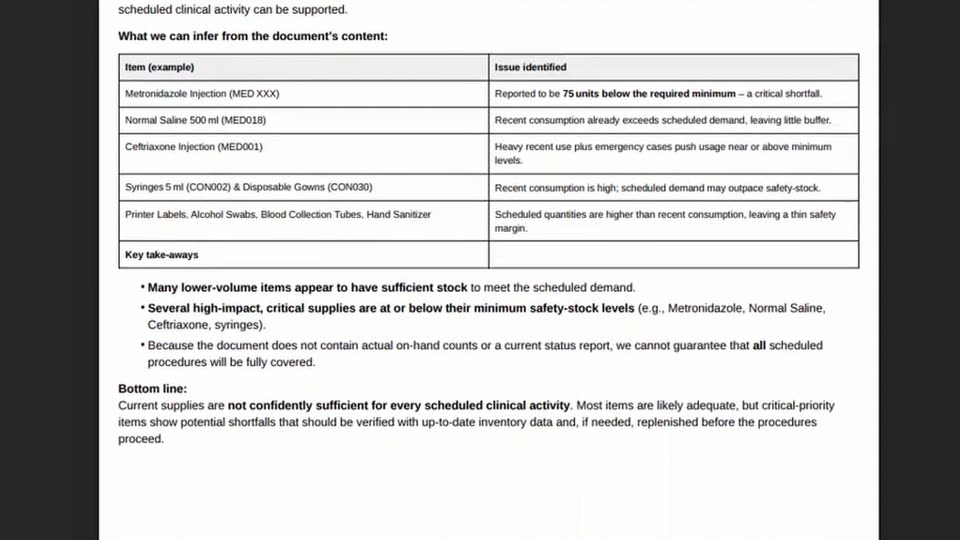 1:43
The workflow checks inventory, demand, expiry, and policy together, then sends the pharmacy team a report.
Explore this demo 1:55
Upload documents, spreadsheets, and scans. Ask questions of one file or many, and get answers that cite the file they came from.
Explore this demo