One question goes in
Compare the reasoning in two named cases.
 NORIKERAll demos
The assistant reads the act, the regulations, and both judgments, then compares the reasoning with section numbers.
FinBlade AI · Produced by ICS Nett · Sample data
See this with your own dataTwo judgments apply the same statute and reach opposite outcomes. Working out why means reading the act, the regulations, the practice note, and both judgments side by side. That is hours of careful reading before any analysis starts.
The lawyer receives a structured comparison that points to the sources. The reading is done, and the judgment about what it means stays with the lawyer. By default, the matter files stay inside the firm's boundary.
Compare the reasoning in two named cases.
Five readers take the question to five documents. Each answers from its own file. A sixth searches the registers of case law, instruments, and precedent.
The registers feed one model and the readings feed another. Both meet in a synthesis step with the question still attached.
The answer sets out the issues side by side: material breach, remediability, notice, and the cure period, each with its section number.
2 judgments, the same statute, opposite outcomes. Working out why means reading the Act, the regulations, the Practice Note, and both judgments side by side. This is the Legal Research and Case Intelligence Assistant. One question goes in at the top. 11 nodes pick it up at once. Compare the reasoning in case-014 and case-027. 5 readers take it to 5 documents. Each answers from its own file. A 6th searches the registers, case law, instruments, precedent. The registers feed one model. The readings feed another. Both streams meet in the synthesis node, with the questions still attached. What comes back is not a summary; it is a comparison. Material breach, remediability, notice, the cure period, with the section numbers. Case-014 took the cumulative approach. Case-027 held an express cure period displaces it. The notice failed Section 25. Termination became repudiation. 8 sources. 3 analysis stages, 1 researched answer.
Company names, people, and figures in these demos are illustrative. Your configuration, data access, and deployment are defined during scoping.
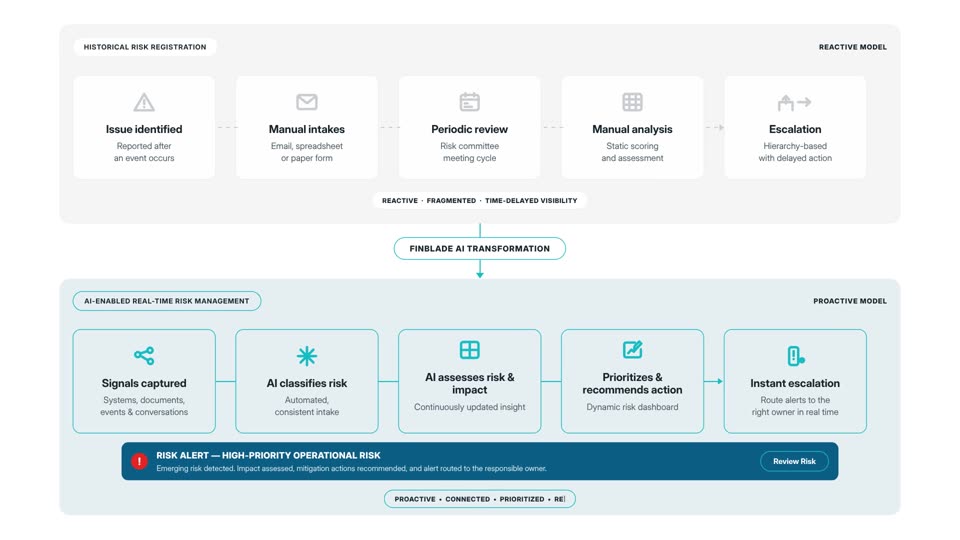 0:51
A 51-second look at moving risk work from after the event to the moment a signal appears.
Explore this demo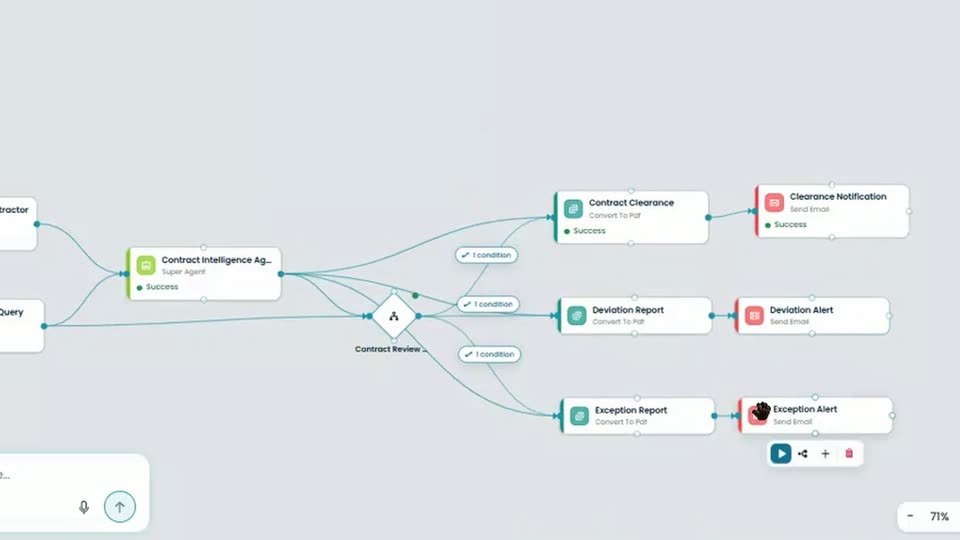 2:02
Key terms are extracted into a table, checked against your clause rules, and routed as clear, deviation, or exception.
Explore this demo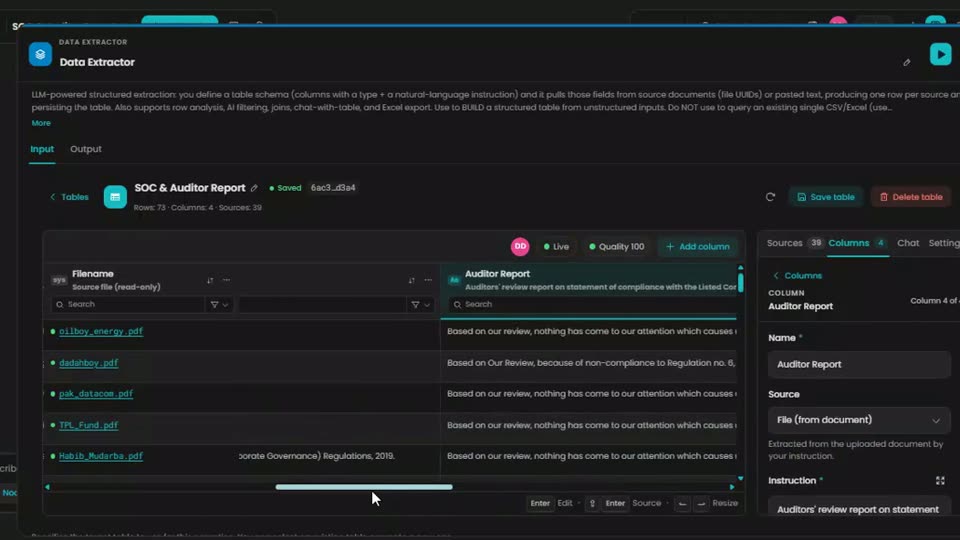 2:22
One step pulls the same fields from every filing into a single table. Each row links back to its source.
Explore this demo