Signals are captured as they happen
The platform reads signals across systems, documents, events, and conversations.
 NORIKERAll demos
A 51-second look at moving risk work from after the event to the moment a signal appears.
FinBlade AI · Produced by ICS Nett · Sample data
See this with your own dataMost risk management records what has already happened. A risk comes in by email, spreadsheet, or paper form. It waits for the next committee meeting, gets scored by hand, and climbs the hierarchy while days pass.
This short explainer is the best opener for a risk or compliance conversation. It frames the change in plain terms: five manual steps become one continuous process, and each risk has an owner before anyone files a report.
The platform reads signals across systems, documents, events, and conversations.
The AI applies one consistent intake, so two people do not score the same risk differently.
Assessment runs all the time, not once a quarter.
The platform ranks what matters, recommends an action, and routes the alert to the responsible person.
Most risk management records what has already happened. A risk surfaces only after the event. It comes in by email, spreadsheet, or paper form. It waits for the next committee meeting. It is scored by hand on a static scale. Then it climbs the hierarchy, losing days. 5 manual steps and the picture is always out of date. FinBlade AI moves the work to the front. Signals are captured as they happen across every system. The AI classifies each one the same way every time. It assesses impact continuously, not once a quarter. It ranks what matters and recommends the action to take, and it routes the alert to the owner in real time. Found, assessed, and owned before anyone files a report.
Company names, people, and figures in these demos are illustrative. Your configuration, data access, and deployment are defined during scoping.
 1:38
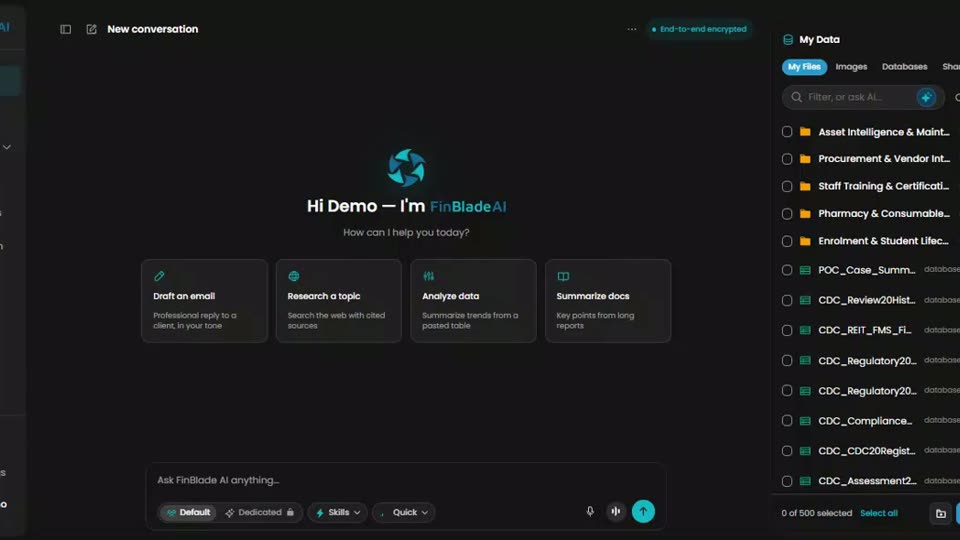
One secure workspace to chat with your data, automate your work, and launch AI apps. This is the fastest way to see how the parts fit.
Explore this demo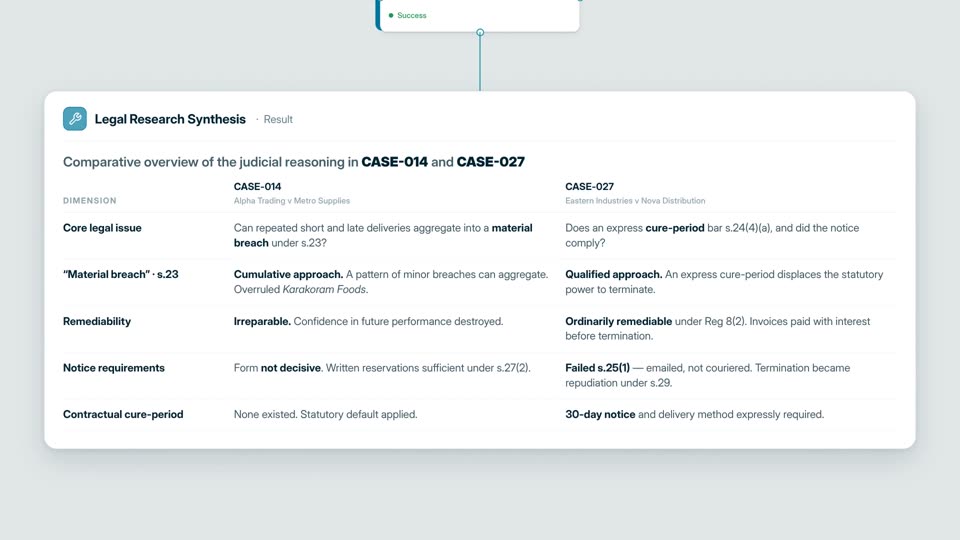 1:32
The assistant reads the act, the regulations, and both judgments, then compares the reasoning with section numbers.
Explore this demo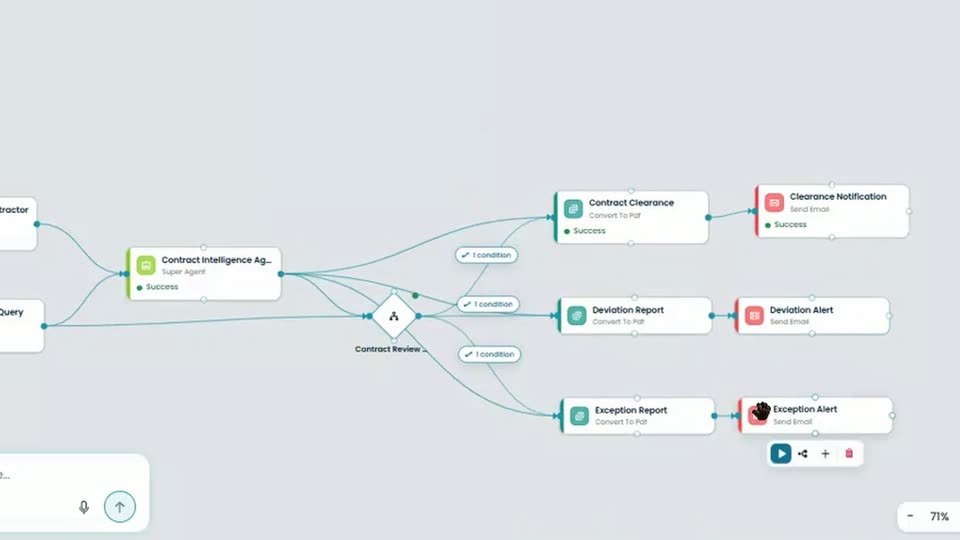 2:02
Key terms are extracted into a table, checked against your clause rules, and routed as clear, deviation, or exception.
Explore this demo